
The Future of the Supercar Market: A 2026 Strategic Investment Outlook
The global landscape for high-performance automobiles is undergoing its most radical transformation in a century. As we move through 2026, the supercar market is no longer just about raw horsepower or top-end speed; it is an intricate, high-stakes collision of heritage engineering, sustainable innovation, and ultra-high-net-worth (UHNW) portfolio management. Valued for significant growth through 2030, this sector represents a unique intersection of luxury consumption and investment-grade asset allocation.

Having spent a decade analyzing automotive trends and advising private collectors on high-end acquisitions, I’ve watched the supercar market pivot from a pure display of mechanical excess to a sophisticated, technology-driven industry. If you are looking to enter this space—either as an investor or a collector—understanding the 2026 market dynamics is essential.
Market Overview: The 2026 Trajectory
The supercar market is projected to grow by approximately USD 11.93 billion by 2030, maintaining a steady CAGR of 6.6%. While these figures reflect broad industry health, the nuance lies in the shift toward hybrid powertrains and electric integration.
In my experience, the modern collector isn’t just buying a vehicle; they are buying a stake in the evolution of mobility. Whether you are eyeing a classic naturally aspirated ICE (Internal Combustion Engine) model or the latest high-performance EV, the decision-making process today is far more complex than it was five years ago.
What This Means for You
For the prospective buyer or investor, the 2026 supercar market offers a dichotomy: the fading era of pure mechanical engagement versus the rise of digitized, software-defined performance.
The ICE Premium: Traditional engines are becoming “legacy assets.” As manufacturers limit production of pure combustion models to meet emission regulations, these cars are seeing a valuation floor.
The EV Shift: High-performance EVs are no longer “niche.” With torque-vectoring and advanced energy recovery systems, they are redefining what it means to be fast.
Should You Buy, Wait, or Invest?
If you are asking whether you should pull the trigger on a purchase, consider your objective:
For Investment: Focus on “low-volume, high-heritage” models. A limited-run ICE supercar from an established brand (Ferrari, Pagani) is effectively a hedge against inflation.
For Performance: The current wave of hybrid hypercars offers the best of both worlds. The integration of electric power not only improves 0-60 mph times by up to 18% but also provides a more “future-proofed” ownership experience.
The Wait-and-See Approach: If you are unsure about the long-term reliability of early-gen electric platforms, I recommend waiting for the 2028-2030 cycle, when solid-state battery tech and 800-volt charging architectures reach maturity.
Case Study: The Cost of Improper Planning
I recently consulted with a client who purchased a limited-edition EV supercar in 2024 without considering the “ownership infrastructure.” Within 18 months, the lack of private high-capacity charging solutions and the rapid depreciation of early software-defined architectures turned a “prestige purchase” into a logistics headache.
Conversely, another client invested in a naturally aspirated V12 model, citing its scarcity and brand heritage. That vehicle has appreciated by 12% in two years. The lesson? Know the difference between a “tech-heavy appliance” and an “investment-grade asset.”

Best Financial Strategies Right Now (2026)
Navigating the supercar market requires more than just capital; it requires a strategy.
Diversify Powertrain Risks: Do not go “all in” on pure EV supercars if you are looking for long-term hold value. Keep a balanced portfolio of legacy combustion assets and high-tech hybrids.
Consider Financing vs. Cash: With current mortgage rates and high-end automotive interest rates remaining volatile, look into specialized luxury car loans or refinancing existing assets to free up liquidity for new acquisitions.
Focus on Total Cost of Ownership (TCO): Beyond the sticker price, account for the “exclusivity tax”—insurance premiums for high-performance vehicles, specialized maintenance for carbon-fiber bodies, and the hidden cost of proprietary software updates.
Mistakes to Avoid That Could Cost You Money
Ignoring Homologation/Regional Compliance: Buying a car from a different market (e.g., importing a European spec to the US) can lead to massive compliance costs. I’ve seen owners lose 20% of the vehicle’s value just trying to pass emissions testing in their home country.
Overlooking Software Longevity: In 2026, a supercar is essentially a rolling computer. If the manufacturer pulls support for the vehicle’s digital ecosystem, your “smart” performance car could become obsolete overnight.
Buying Without a Pre-Purchase Inspection (PPI): Even with new cars, bespoke customization can mask hidden chassis issues. Always invest in an independent inspection from an expert who specializes in that specific supercar market segment.
Pricing Impact and Market Segmentation
When evaluating pricing, note that the coupe segment still holds the strongest residual value, largely because it caters to the traditional collector’s mindset. Meanwhile, the convertible market is seeing renewed interest due to the sensory-rich experience that electrified powertrains can sometimes mute.
If you are looking for a baseline, the cost of entry into the “serious collector” category has risen by 15% since 2024. This isn’t just inflation; it’s the cost of the advanced materials—like forged carbon fiber and 3D-printed metal components—that are now standard in high-end builds.
The Verdict: Act With Precision
The supercar market in 2026 is an environment for the calculated, not the impulsive. Whether you are looking at home loans to leverage equity into an investment-grade fleet or comparing the best insurance options to protect your capital, the goal remains the same: align your acquisition with your long-term wealth strategy.
If you are ready to explore your options, don’t leave your next major move to chance. Compare the latest performance metrics, analyze the current market trends for specific models, and ensure your financial strategy is robust enough to handle the luxury automotive landscape.
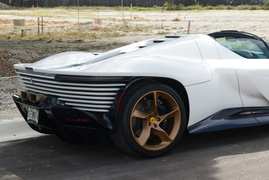
Are you ready to optimize your collection or make your first high-performance investment? Reach out today to compare the best available models and secure a strategy that drives value forward.