



The Slate Truck Roadmap: Pricing Revelations and 2026 Delivery Timeline
For the better part of two years, the automotive industry has kept a watchful eye on the development of the Slate Truck. Positioned as a disruptor in the light-duty electric vehicle market, this back-to-basics machine has captivated enthusiasts and fleet managers alike. With significant venture backing—including support from Jeff Bezos—the pressure on Slate Auto to deliver on its ambitious promises has never been higher. As we navigate the complex landscape of 2026, the silence surrounding the company’s production schedule has finally been broken.
If you have been waiting for concrete details regarding the Slate Truck price, the wait is nearing its conclusion. The company has officially signaled that key financial and logistical milestones will be hit by mid-year, providing clarity to those who have held reservations since the initial reveal.
Pricing Transparency: What to Expect in 2026
The most burning question for prospective buyers is undoubtedly the final Slate Truck price. In an era where vehicle costs have ballooned, the initial promise of a budget-friendly electric utility vehicle feels almost nostalgic. When the project first surfaced, the narrative focused on an accessible entry point near $20,000. However, the economic reality of 2026, coupled with shifts in federal EV tax credits, has necessitated a more nuanced pricing strategy.
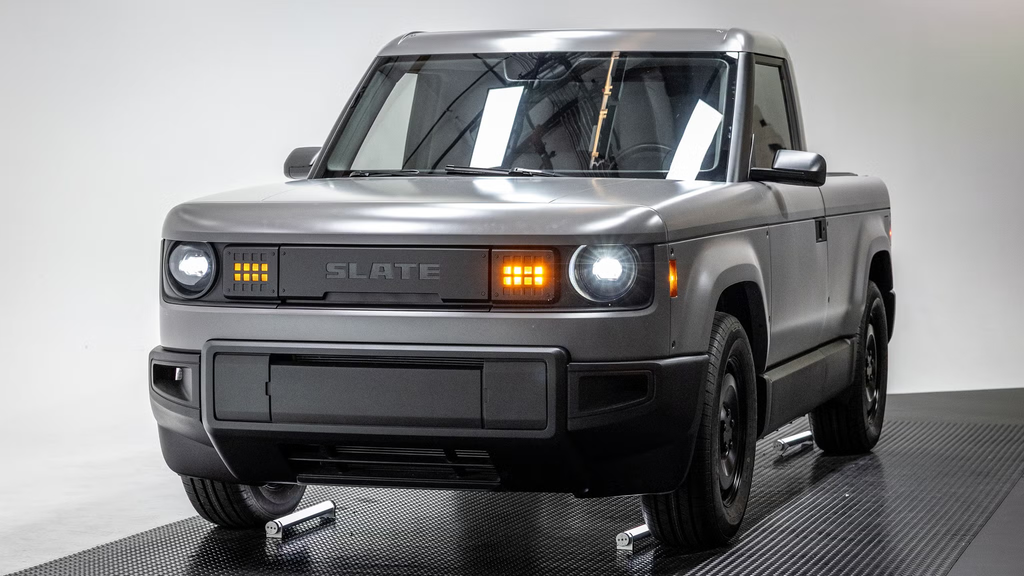
Slate Auto has confirmed that official pricing tiers will be unveiled in late June. While the company has not provided a specific MSRP, their official communication maintains that a “Blank Slate” configuration—the base, stripped-back version of the truck—will sit comfortably in the mid-twenties price bracket.
From an expert perspective, this is a calculated move. By pivoting away from the unrealistic sub-$20,000 goal, the company is aligning itself with the current realities of supply chain costs and high-grade battery production. For those monitoring the electric vehicle market, this mid-twenties price point remains an aggressive, competitive target. It positions the Slate Truck as a direct challenger to secondary work-truck segments, potentially cannibalizing market share from legacy internal combustion engine (ICE) pickups that offer fewer innovative features.
Navigating the EV Pickup Landscape
The electric truck segment has become saturated with high-end, luxury-focused machines. While vehicles like the Rivian or the Ford F-150 Lightning offer high performance, they often come with a heavy price tag that limits their utility as “everyman” tools. The Slate Truck aims to occupy the whitespace—a modular, utilitarian platform that can convert from a pickup to an SUV format.
This modularity is why investors are watching the Slate Truck price so closely. If Slate can maintain the “mid-twenties” cost while offering the versatility of an SUV, the total cost of ownership (TCO) for a small business or a suburban household becomes incredibly attractive. When evaluating your investment in an electric utility vehicle, you should also factor in the secondary benefits: reduced maintenance costs, lower fuel expenses, and the potential for federal or state-level commercial vehicle incentives that can lower your effective bottom line.
Delivery Milestones: When Will the Trucks Hit the Road?

Pricing is only half the battle. The other side of the coin is execution. Slate Auto has informed its base of deposit holders that initial deliveries are scheduled to begin by the end of 2026. This timeline is critical, as it places the company squarely in the mix for late-year fulfillment, just in time for the holiday quarter.
For those who have already placed a deposit, or for those considering it, the “late-year delivery” window is a significant update. While nothing in the automotive manufacturing sector is ever fully immune to delays—especially with the current volatility in the lithium-ion supply chain—the fact that a date has been set indicates that the production line is moving toward validation.
If you are looking to secure one of these units from the first batch, the path remains open but narrow. A refundable $50 deposit through the Slate Auto portal currently locks in your priority standing. However, the company has cautioned that these early-production slots are filling rapidly, suggesting that the “early adopter” window is beginning to close.
Why the Slate Truck Matters for Fleet Management
If you manage a business fleet, the Slate Truck price structure is arguably more interesting than it is for the casual consumer. High-CPC keywords in the industry, such as “electric fleet vehicles” and “commercial EV infrastructure,” are trending because businesses are desperately seeking ways to lower operational costs while meeting new sustainability mandates.
The Slate Truck is not being marketed as a toy. It is a tool. With its simple design, it promises a lower barrier to entry for companies looking to electrify their local delivery services, landscaping crews, or maintenance fleets. By keeping the vehicle design “back-to-basics,” Slate is ostensibly reducing the complexity of the onboard electronics, which could mean fewer potential points of failure and faster repair times. For a fleet manager, this simplicity is a massive advantage over more complex, sensor-heavy electric SUVs that are currently dominating the retail market.
The Future of Affordable Electric Mobility
As we head into the second half of 2026, the automotive market is at a crossroads. We are seeing a retreat from the “premium-only” electric strategy. Consumers are demanding affordability, and the industry is responding with platforms that prioritize utility over luxury.
The strategy behind the Slate Truck appears to be a direct response to this demand. By stripping away non-essential luxury features and focusing on the core requirement—moving cargo and passengers efficiently—the company is leaning into the principles of value engineering.
If you are on the fence about placing a deposit, here is the professional takeaway:
Monitor the June Announcement: Pay close attention to the final MSRP and the available tax credit eligibility for the 2026 tax year.
Evaluate Your Use Case: If you need a modular vehicle that can serve as both a work truck and a daily driver, the Slate platform is unique in its current segment.
Secure Your Spot: Given the volume of interest from both individual buyers and commercial entities, the $50 refundable deposit is a low-risk way to keep your options open while the final production specs are hammered out.
The wait is almost over. By late June, the picture will be much clearer, and by year-end, we will see if this “Blank Slate” truly lives up to its promise of redefining the budget-friendly electric truck market.
Are you ready to transition your driveway or your fleet to a more efficient, sustainable platform? Secure your position in the production line today by visiting the Slate Auto website and placing your deposit before the first wave of allocations is fully claimed.